

Ever had a customer ask for "0.5g cones," only to realize you don't actually sell cones in grams? It's one of the most common mismatches in B2B pre-roll production, and it usually isn't a misunderstanding so much as two sides speaking two different languages. So what does a buyer actually mean when they say "0.5g cone," and how should you answer them?
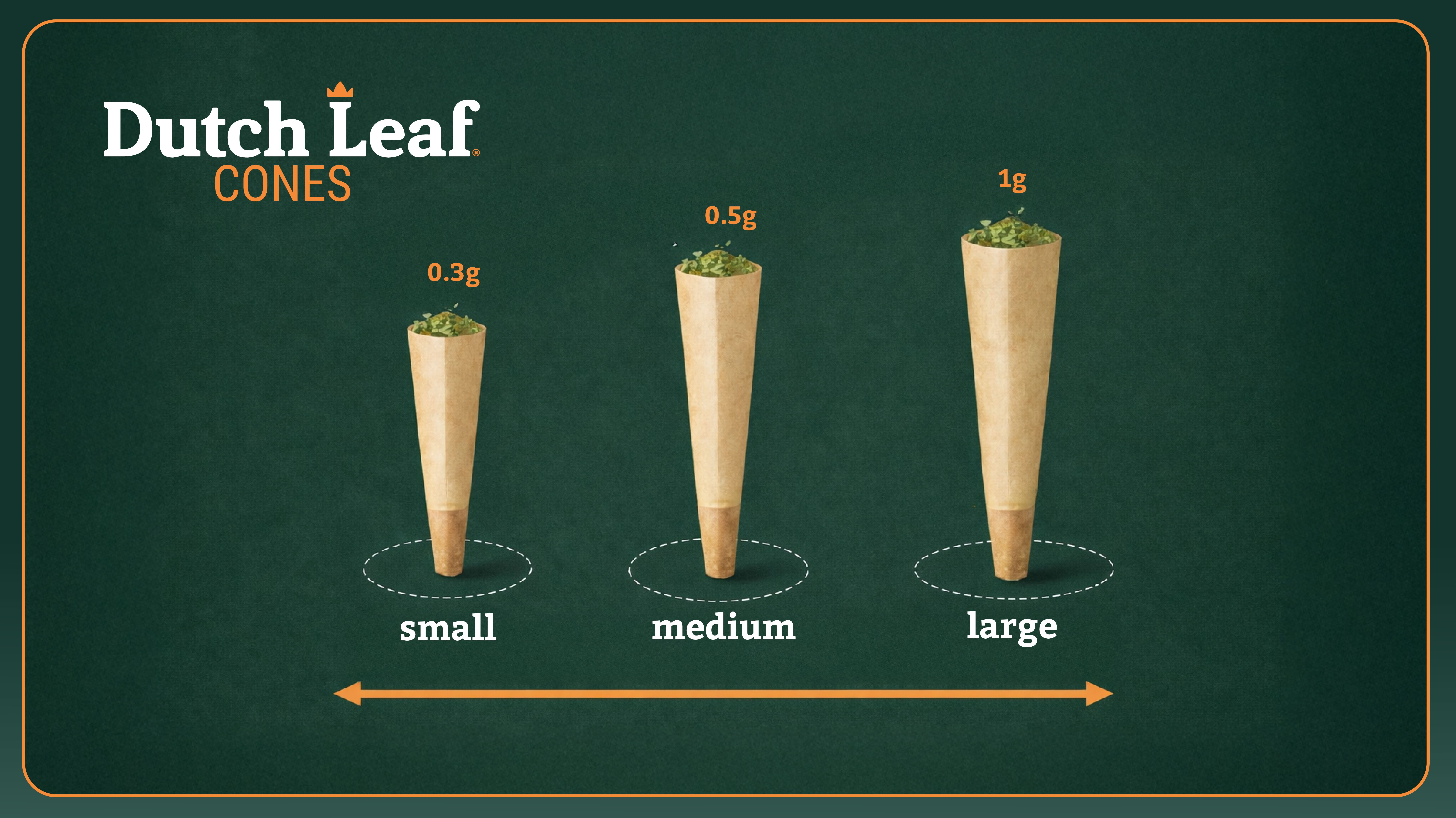
Grams Are a SKU Language, Cone Sizes Are a Manufacturing Language
In North America, grams are how a product is described on the label and the shelf. They tell a customer what they're buying. Cone manufacturers, on the other hand, build and specify cones by geometry: total length, filter length, taper, and diameter. Neither side is wrong, they're just describing two different parts of the same product.
Most of the time, when a buyer says "0.5g cone," they mean the standard 84mm cone with a 26mm filter, often called a 1¼. It's widely used across the industry as the starting point for a half-gram SKU. A rough way to translate common gram targets into sizes:
- ~0.25 to 0.35g SKUs often map to the 70mm "dogwalker" format
- ~0.5g SKUs often start with the 84mm / 26mm (1¼)
- ~0.75g SKUs are often built around 98mm
- ~1g SKUs are often built around 109mm (king)
These are common industry starting points, not fixed rules. Actual results depend on what happens after the cone leaves the case.
The Cone Doesn't Decide the Final Weight, Your Process Does
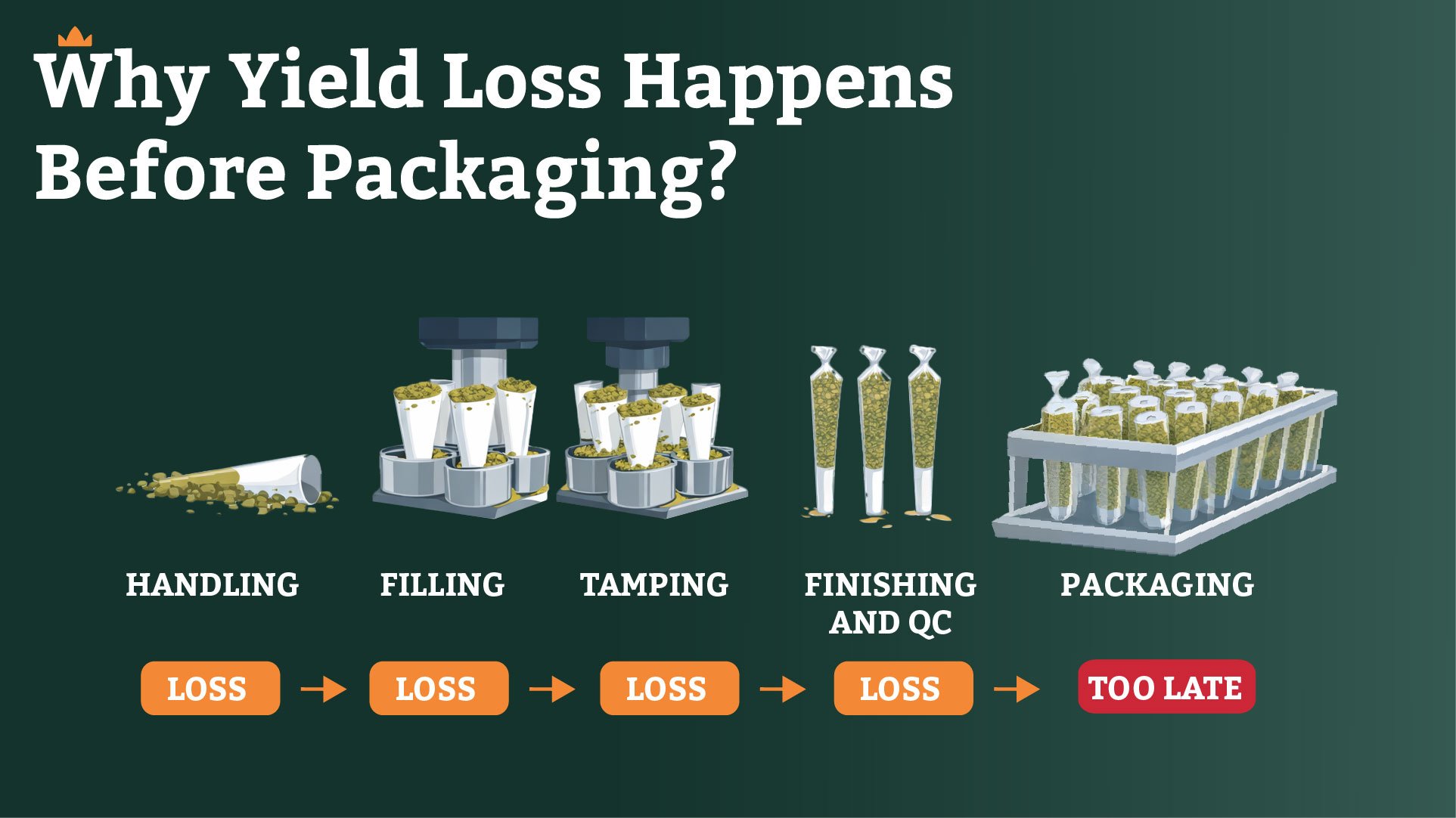
Cone size sets a starting point, but it doesn't lock in the final net weight. Grind size, moisture, fill method, tamping pressure, and even finishing style can all shift the result up or down. Flower density plays a role too. Denser, more compact flower packs differently than looser, fluffier flower, even inside the exact same cone.
That's why two operators running the same 84mm cone can land in different places: one consistently hits 0.5g, while another comes off the machine closer to 0.6 to 0.7g. The cone didn't change. The process around it did.
Translating Grams Into Cone Sizes
The most useful way to handle a "0.5g cone" request isn't to correct the customer's language, it's to ask a few questions: What's the target net fill weight, what machine is running the product, and how firm is the pack? Those answers tell you far more than the size name alone.
Cone quality still plays a role in how easy that dial-in is. Consistent geometry and stable structure make it easier to hit a target weight reliably and keep fallout under control as volume scales, which is exactly the kind of consistency Dutch Leaf Cones is built to deliver, batch after batch.
Take a look at our Products Page here.

How to Fill Pre-Rolled Cones in Professional Production
Why Dutch Pre-Roll Cones Are Gaining Ground in North America?
No Comments Yet
Let us know what you think